ISO Certified Manufacturer
Medical Equipment Component
Die Casting

Medical Equipment Component Die Casting
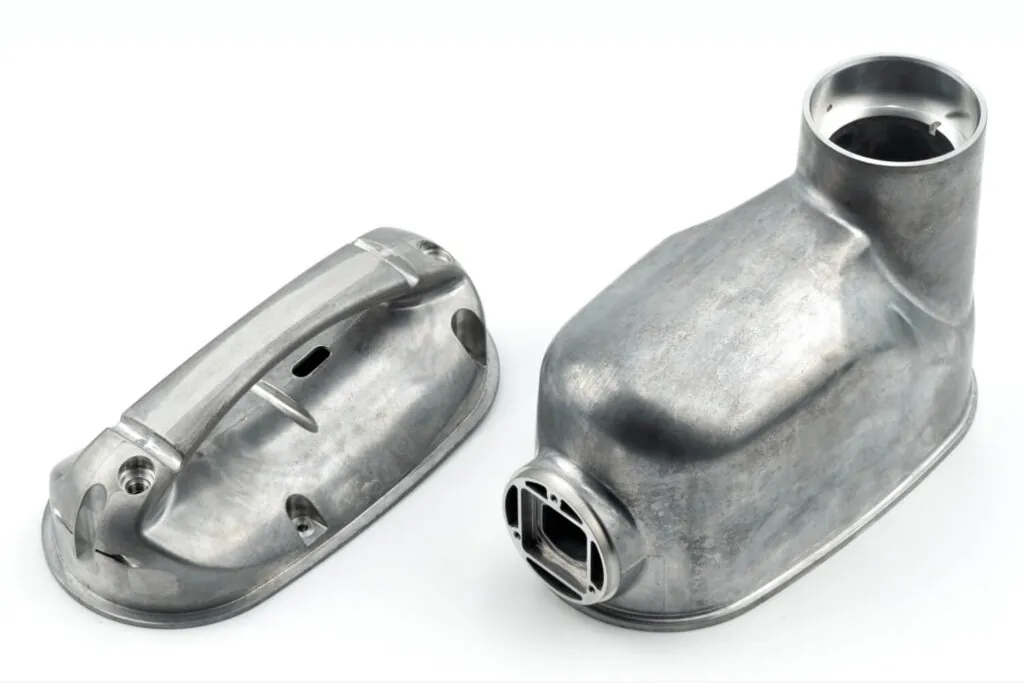
JoinCast supplies precision die cast components for medical equipment manufacturers requiring tight tolerances and consistent dimensional accuracy. Our ADC-12 / A383 and ADC-3 / A360 aluminum alloys deliver the strength-to-weight ratio essential for portable medical devices, diagnostic imaging equipment housings, patient monitoring system components, hospital bed mechanisms, and surgical instrument assemblies. We serve USA, European, and Japanese medical equipment brands with components for X-ray machines, ultrasound systems, respiratory equipment, and hospital infrastructure.
Our temperature-controlled CNC facility maintains ±0.015mm accuracy (H7 tolerances) essential for medical device assembly specifications. Components progress from die casting through precision machining to surface treatment, eliminating coordination delays while maintaining complete traceability. Powder coating, liquid coating, and electro coating provide corrosion resistance against cleaning chemicals and sterilization processes required in clinical environments.
High Precision
Tolerances (±0.015mm)
Material Traceability
& Documentation
Medical Equipment FAQ
If your question is not listed here, please contact us and we will be glad to assist you.
Our components need to meet strict tolerance requirements for device assembly — what can you actually hold?
Our temperature-controlled CNC facility maintains ±0.015mm accuracy, which covers H7 tolerance requirements typical of medical device assembly specifications. This is achieved through a combination of automated Japanese CNC systems, 4th axis machining capability, and verification using Mitutoyo CMM and Keyence 3D scanning equipment. If you have specific tolerance requirements on critical interfaces or bore dimensions, share your drawings with us and we can confirm feasibility before you commit to tooling.
We need full material traceability for our regulatory documentation. Can you support this?
Yes. Material traceability and documentation are part of our standard process for medical equipment customers, not something we treat as an optional extra. We operate under ISO 9001:2015, and our 10-person QC team manages documentation from incoming material inspection through to final shipment. If your regulatory process requires specific documentation formats or additional records at any stage of production, discuss your requirements with us early and we can confirm what we’re able to provide.
What kinds of medical equipment components have you made before?
We supply components to USA, European, and Japanese medical equipment brands across a fairly broad range of applications. These include diagnostic imaging equipment housings, patient monitoring system components, hospital bed mechanisms, surgical instrument assemblies, respiratory equipment parts, and structural components for X-ray and ultrasound systems.
We're concerned about IP protection when moving production to an East Asian supplier. How do you address this?
It’s a legitimate concern, and one that comes up regularly with medical device customers who have proprietary component designs. Taiwan’s legal framework for IP protection is considerably stronger than the Asian average, and manufacturing agreements are enforceable in a way that gives customers meaningful recourse. At Joincast, your designs and tooling are treated as your property. We’re happy to work within NDA arrangements and can discuss the specifics of how we handle customer IP as part of the initial conversation.
Can you get involved with design before our component drawings are finalised?
Yes, and for medical components it’s often worth doing so. Getting a manufacturer involved at the design stage — particularly for die cast parts — can prevent tolerance specifications or geometric features that are difficult or expensive to achieve in production.
Our engineers can review early-stage designs and advise on wall thicknesses, draft angles, feature placement, and alloy selection before drawings are finalised. This doesn’t commit you to anything, but it tends to result in a smoother qualification process and fewer surprises at first article.
What happens if a batch doesn't meet specification?
Non-conforming batches are isolated before shipment as part of our standard QC process, so the aim is always to catch problems before they reach you. If an issue is identified mid-production, our QC team stops the run, investigates the root cause, and determines whether rework is possible or whether parts need to be recast.

Have a question that is not covered in the FAQ? Our AI assistant can help you find answers, products, or the right next step.
Product Gallery