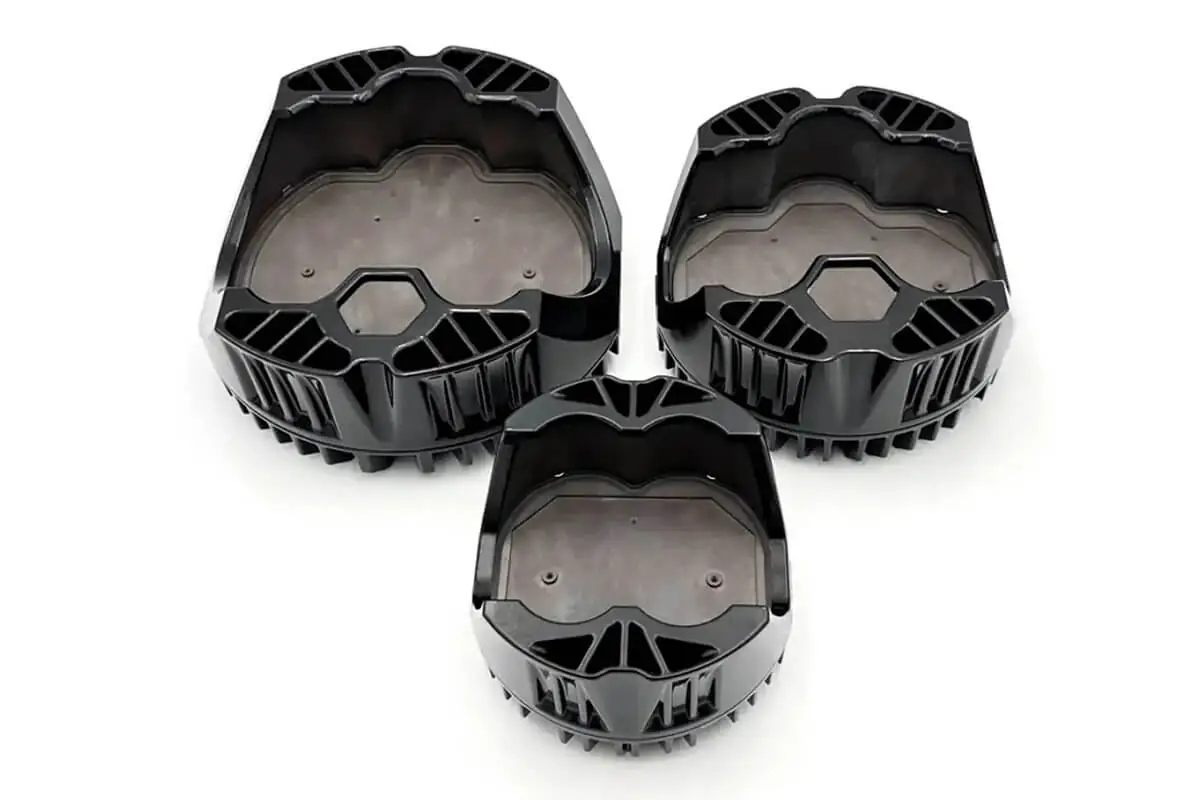
A die cast LED street light housing from JoinCast is normally cast in ADC-12 / A383, with the LED mounting face CNC machined after casting so that thermal contact does not depend on as-cast flatness. Sealing faces and bores are machined where the drawing requires them, before shot blasting, powder or liquid coating, and salt spray testing to ASTM B117.
JoinCast operates a vertically integrated aluminum die casting facility in Changhua, Taiwan, and LED lighting component die casting is one of the sectors we serve, with housings and heat sinks for street lighting, high-bay warehouse fixtures, commercial floodlights and architectural lighting. We cast these housings to our customers’ own designs, for lighting manufacturers in North America and Europe. In this article we explain which features of a street light housing we cast and which we machine, what to state on the drawing, how we finish the housing for outdoor service, and what the housing contributes to your luminaire’s IP rating.
Which features of a street light housing are cast and which are machined
As-cast surfaces typically hold a tolerance of ±0.15 mm, so we machine the faces that determine thermal contact after casting, to the tolerances on your drawing, together with any sealing faces the drawing calls for. The fin array and the external profile normally stay as cast, since die casting forms them, together with integrated mounting features, in a single shot.
The table shows where each feature of a typical housing is formed, what to state on the drawing, and how we check it.
| Feature on a street light housing | Cast or machined | What to state on the drawing | How we verify it |
|---|---|---|---|
| Fin array and external profile | Cast | Fin layout, draft and cosmetic faces | 3D scan against CAD |
| LED mounting face | Machined | Flatness and the datum it relates to | CMM |
| Gasket or lens frame sealing face | Machined where the drawing requires it | Flatness and the extent of the sealing area | CMM |
| Spigot bore and bracket bosses | Machined where the drawing requires it | Bore size, tolerance and position | CMM |
| Coated external surfaces | Cast, then shot blasted and coated | Finish system and color reference | Roughness tester before coating; visual inspection and spectrophotometer after |
| Corrosion resistance of the finish | Finishing | Test method, hours and pass criteria | Salt spray testing to ASTM B117 |
The LED mounting face and the thermal path
Base plate flatness is one of the more common sources of problems with die cast heat sinks, and it directly affects thermal contact with the LED board. We machine the mounting face after casting on CNC machining centers in our temperature-controlled facility, and we verify its flatness on our Mitutoyo CMMs before we ship the parts. During the run we also compare parts against your CAD model on a Keyence 3D scanner, so that we can find and correct any drift in flatness while the batch is still in production rather than at final inspection.
A large flat face can also move slightly after machining, as residual stress from casting relaxes, and our glossary entry on post-cast dimensional stability explains why. If your drawing calls for flatness tighter than about 0.05 mm across a wide mounting face, please let us know this at the time of quotation, so that we can agree with you how and when the face is measured.
Sealing faces, spigot bores and mounting bosses
Where the drawing requires it, we also machine the face that the gasket or lens frame seals against, the spigot bore and the bosses that locate the housing on its bracket. All of our CNC machining centers have fourth-axis capability, which is useful on a housing that needs machining on more than one face, and our fixture team builds the fixtures for each housing in house.
It’s worth marking on the drawing which faces seal and which are only cosmetic, since we may not be able to tell this from the drawing alone, especially if we are making only one of the components of the final product. Our mold engineering team reviews your CAD files at the quoting stage, as described in our article on how we review a housing drawing. During that review it is also worth agreeing that the parting line and ejector marks stay off the sealing face where the geometry allows, because anything left there has to be machined away before the face will be able to seal reliably.
Alloy, size and fin geometry for a die cast street light housing
ADC-12 / A383 is our standard alloy recommendation for most housing and heat sink work, because it offers a good balance of thermal conductivity, castability and cost. Alloy 383 is one of the registered aluminum die casting alloys covered by ASTM B85/B85M-25, the ASTM International specification for aluminum-alloy die castings, and ADC-12 is its equivalent under the JIS standards, as our reference on die casting alloy names across regions explains.
ADC-12 for most housings, and when to discuss A360
For a housing that will be installed near the sea, we would suggest discussing ADC-3 / A360 with us at quotation, since it’s the alloy we use for marine work. The North American Die Casting Association (NADCA) notes in its aluminum alloy data that corrosion resistance increases or decreases inversely with copper content, and it describes alloy 360 as offering high corrosion resistance. If the coating on your housing is likely to be chipped or scratched in service, we would give the alloy choice more weight. Our guide to aluminum die casting alloy selection compares the alloys in more detail.
Most ADC-12 is produced largely from secondary metal, and well-controlled secondary ingot performs well in general industrial parts, provided the chemistry stays within specification from one lot to the next. Our entry on aluminum ingot quality and sourcing covers this in more detail. We check incoming ingot on our spectrometer before production begins, and the material certification that ships with each order records the alloy composition.
Housing size, machine tonnage and the fin array
We run 12 die casting machines from 135 to 900 tons, and we cast parts weighing from 5 grams to 3 kilograms. The 900 ton machine takes castings up to 700 mm, but our hanger shot blaster takes parts up to 600 mm, so for a coated housing longer than 600 mm we would suggest confirming the finishing route with us at quotation. A housing longer than 700 mm or heavier than 3 kg is outside our current range, and we would rather you knew that before sending a drawing. Within that range, our mold engineering team calculates the casting machine your housing needs from its projected area during quotation, as our glossary entry on machine tonnage selection explains.
Typical wall sections run from 2.5 to 4.5 mm, depending on part size and flow length. With dense or complex fin arrangements, getting the fill right at the design stage is important, so we use mold flow simulation to model how the metal fills the fins, where porosity is likely to form and how the gates and runners should be sized, before any tooling is machined. Corrections after the tool is cut are expensive and slow, so the fin layout is best settled at that review. Our page on die cast heat sinks and controller housings covers integrated fin designs further.
Finishing a die cast street light housing for outdoor service
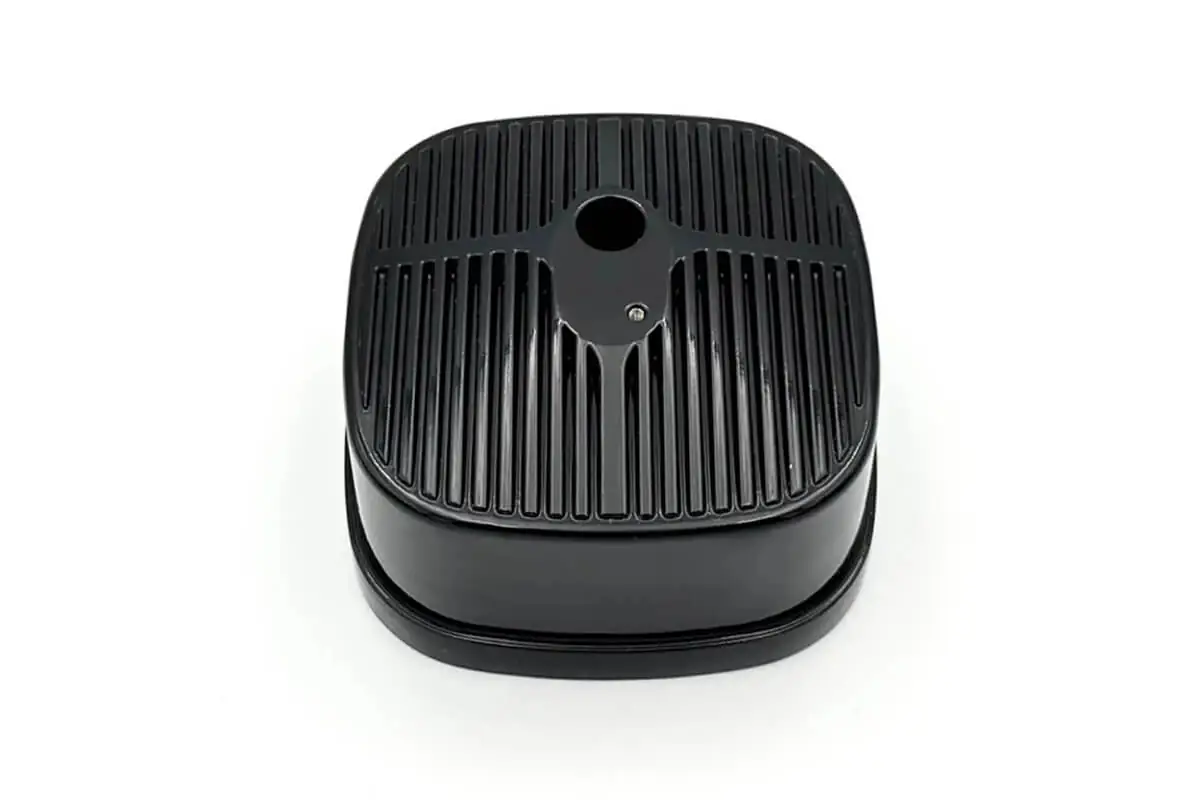
We offer 5 surface treatments for our customers: powder coating, electro-coating, liquid coating, anodizing and SurTec 650 trivalent chromium treatment. For LED housings we offer powder coating for outdoor durability, and liquid coating where a housing requires a specific color.
Shot blasting before powder or liquid coating
A housing that is going to be coated normally needs only shot blasting before coating. Our shot blasting typically produces a surface roughness of Ra 1.6 to 3.2 μm, which gives the coating an excellent surface to adhere to, and we check roughness on our two dedicated testers before the parts go on to coating. Liquid coating allows custom color matching for branded products, and we check the color on a spectrophotometer.
Salt spray testing on coated housings
Our salt spray tester covers powder-coated, liquid-coated and anodized surfaces, and for LED lighting fixtures exposed to coastal or outdoor environments, testing typically runs for 96 to 500 hours, depending on your application. ASTM B117 specifies how the salt spray apparatus is operated, but it does not prescribe the exposure period for a product or how the results should be interpreted. For that reason, specify the pass criteria with us before tooling. Our article on what an ASTM B117 result records covers the standard in more detail.
Can a die cast housing carry an IP rating on its own?
IP (ingress protection) ratings are classified under IEC 60529, the standard that applies to the degrees of protection provided by enclosures for electrical equipment. IEC 60598-2-3 sets the particular requirements for luminaires for road and street lighting. We supply the housing cast, machined and finished, but we don’t assemble or test luminaires, so we can’t give an IP rating for a housing on its own.
What the casting has to deliver for your IP test
Your IP result depends on the gasket, the lens, the cable gland and the assembly, but it also depends on the housing, since the sealing face must be flat and free of parting line flash. If you tell us your IP target and send your gasket design with the CAD files, our mold engineers can review the sealing faces at the quoting stage, before the tool is made.
First article inspection and the records that ship with each order
Our quality team carries out first article inspection before production, using two Mitutoyo CMMs and a Keyence 3D scanner to check every specified dimension against your drawing and CAD model. We send the FAI report and physical samples for your approval before we start full production. With standard shipments we include dimensional inspection reports with CMM data for critical features, material certification and visual inspection checklists, and we inspect every part visually before packing.
If you have a street light housing in development, please get in touch and send us the CAD model with your drawing, and we’ll be glad to comment on the alloy, the machined faces and the finish before you issue it for quotation. Our article on sourcing die cast pneumatic tool components sets out our tooling terms and what a quotation from us contains.
Frequently asked questions about die cast LED street light housings
Which alloy do you cast street light housings in?
JoinCast recommends ADC-12 / A383 for most LED street light housings, for its balance of thermal conductivity, castability and cost. For a housing installed near the sea, JoinCast suggests discussing ADC-3 / A360 at quotation, since it is the alloy JoinCast uses for marine work and the North American Die Casting Association (NADCA) describes alloy 360 as offering high corrosion resistance.
Which faces of a street light housing do you machine?
JoinCast machines the LED mounting face of a street light housing after casting, so that its flatness supports thermal contact with the LED board, and verifies it on a CMM (coordinate measuring machine). Where the drawing requires it, JoinCast also machines the gasket sealing face, the spigot bore and the bracket bosses, and can hold bores to H7. The fin array and external profile normally stay as cast.
How large a street light housing can you cast?
JoinCast casts parts weighing from 5 grams to 3 kilograms on 12 machines from 135 to 900 tons, and its 900 ton machine takes castings up to 700 mm. Its hanger shot blaster takes parts up to 600 mm, so the finishing route for a coated housing longer than that should be confirmed at quotation. A street light housing heavier than 3 kg or longer than 700 mm is outside JoinCast’s current range.
Which coatings do you offer for street light housings?
JoinCast applies powder coating, electro-coating, liquid coating, anodizing and SurTec 650 trivalent chromium treatment in house, with shot blasting before coating. For LED housings, JoinCast offers powder coating for outdoor durability and liquid coating for custom color matching. Salt spray testing to ASTM B117 typically runs for 96 to 500 hours for outdoor LED lighting fixtures, with the hours and pass criteria agreed before tooling.
Do you test the IP rating of a street light housing?
JoinCast does not assemble or test luminaires, so it cannot give an IP rating for a die cast street light housing on its own. JoinCast machines and measures the sealing faces, bores and bosses that the IP result of the complete luminaire depends on, and supplies first article inspection reports and CMM data with the housings.