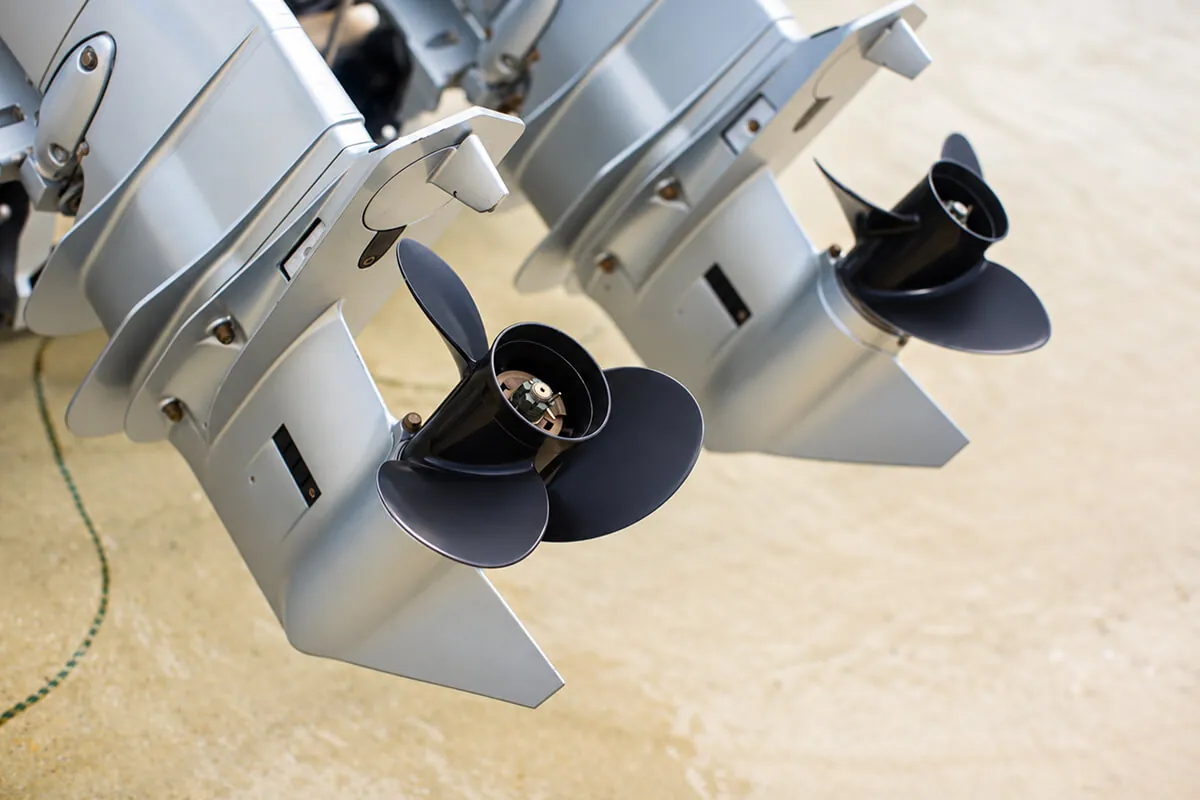
For die cast marine motor components, JoinCast works primarily with ADC-3 and A360 rather than ADC-12, which covers most of our general work. We finish the castings in house and test their corrosion resistance to ASTM B117. As-cast surfaces typically hold a tolerance of ±0.15 mm, and we machine bores and mating faces to the tolerances on your drawing.
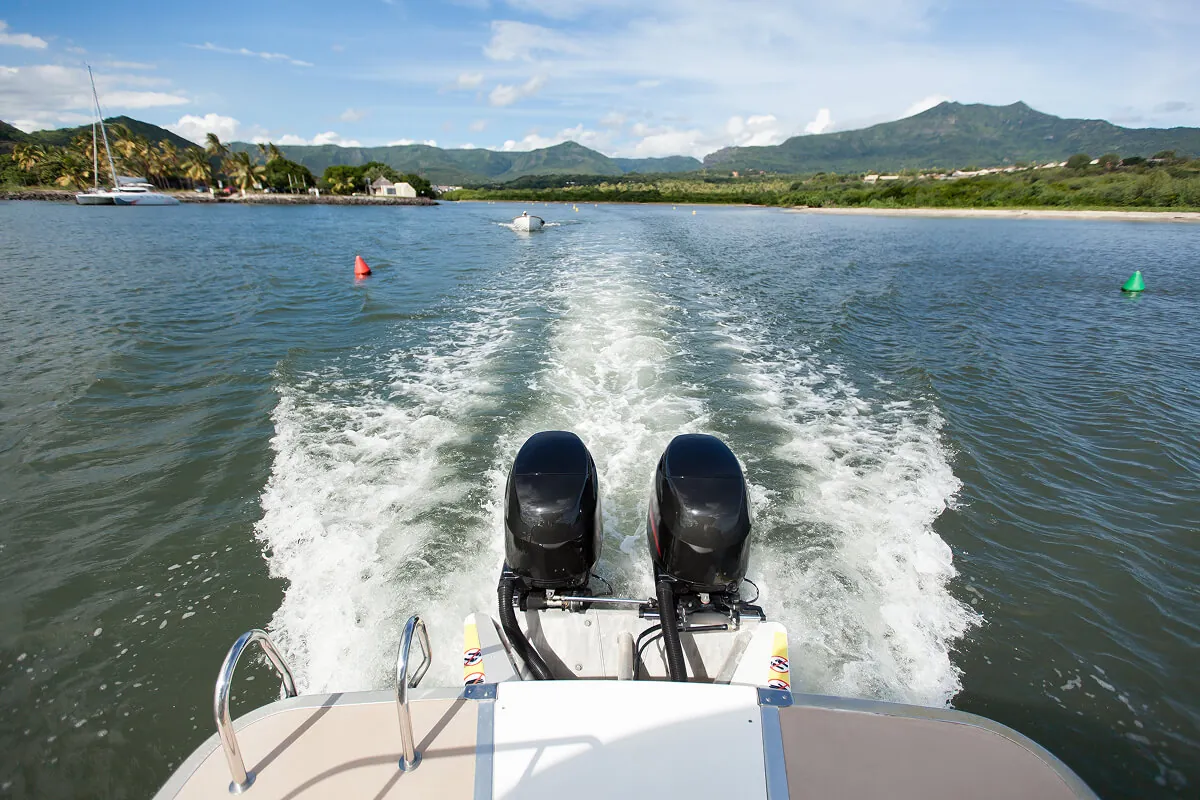
JoinCast is a vertically integrated aluminum die casting plant in Changhua, Taiwan, and marine aluminum die casting is one of the sectors we serve. Common applications include aluminum propellers, crankcases and other engine components for commercial and recreational use, and a good deal of our marine work is for outboard motors. The notes on your drawing determine how accurately we can quote a marine casting, so in this article we explain what we would suggest stating for the alloy, the finish, the salt spray requirement and the machined features. Figures here are current as of September 2026.
Which alloy we pour for marine motor components
We work primarily with ADC-3 and A360 for marine applications, while ADC-12 and A383 cover most of our other work. We would suggest confirming the alloy with any supplier at the outset, since what matters for your part is the alloy the plant pours in production.
ADC-3 and A360 against ADC-12
The compositions of A360 and A383 are specified in ASTM B85/B85M-25, the ASTM International specification for aluminum-alloy die castings, so we don’t reproduce them here. The difficulty tends to lie in the naming, because a European drawing and a Taiwanese quotation may use different designations for the same metal. Our reference on ADC-12 and its regional equivalents sets the designations side by side, and the longer piece on aluminum die casting alloy selection covers the comparison in full.
Wall sections, casting weight and machine selection
Our typical wall section is 2.5 to 4.5 mm, depending on part size and flow length. Walls below 1.5 mm risk incomplete fill, and we would suggest keeping the thickest sections under about 15 mm, since heavier sections are prone to shrinkage and porosity. We cast parts of up to 3 kg on machines from 135 to 900 tons, which covers the majority of marine component requirements, and some of those parts carry integrated cooling channels.
The machine guide we publish relates tonnage to part size, but it is only a rough guide. Tonnage in fact depends on the projected area of the part, and our mold engineering team calculates it from your CAD files during quoting. If you send us the CAD model at an early stage, we can confirm the machine size for you, and you won’t need to estimate it yourself.
Finish systems we apply to marine castings
We run five surface treatments in house: powder coating, electro-coating, liquid coating, anodizing and SurTec 650 trivalent chromium treatment. Anodizing and trivalent chromium treatment provide corrosion resistance for marine and outdoor equipment. Liquid coating allows custom color matching on branded OEM parts, so it is worth considering where the part is visible to the end user.
In-house finishing
Our surface treatment systems are fully automated, and because we run them ourselves, you avoid the delays that come with coordinating an outside finishing vendor. We also polish and shot blast in house, on eight polishing machines and three shot blasting systems. These processes prepare the surface that the coating is applied to, and on a marine part, where the coating carries much of the corrosion protection, that preparation deserves particular care.
How to specify the finish on your drawing
We would suggest naming the finish system on the drawing. A note such as “marine grade coating” does not specify a treatment, and we would need to ask you which one you mean. The finish note works best when it gives the treatment, the surfaces it covers and the test requirement together. It also helps us to know which faces are cosmetic and which are hidden under a mating component, because we can’t tell that from the model.
What an ASTM B117 salt spray result records
Our quality team conducts ASTM B117 testing to validate corrosion resistance, typically for 96 to 500 hours on marine components (as of September 2026, the current edition of the standard is B117-26a). B117 is a standard practice for operating a salt spray apparatus. It specifies the apparatus, the procedure and the conditions, so a B117 result tells you how the test was carried out. ASTM itself notes that performance in natural environments “has seldom been correlated with salt spray results when used as stand-alone data”, which is why a number of hours means little unless the finish system and the test conditions are stated with it.
What the test covers, and what to agree
Our salt spray tester covers powder-coated, liquid-coated and anodized surfaces. ISO 9227:2022 is the international standard for comparable salt spray tests, and your own specification may refer to it instead of ASTM B117.
Before we cut tooling, we would suggest agreeing five points with us: the duration, the finish system tested, the surfaces the test covers, what counts as a pass, and who retains the samples. Sample retention is much easier to settle at quotation than during a disagreement about a batch. The hours are most useful for comparing one finish system with another.
Which features we cast and which we machine
As-cast surfaces typically hold a tolerance of ±0.15 mm. Where the drawing requires it, we machine bores to H7, and we machine mating faces and threaded features to the tolerances the drawing specifies. We would suggest deciding at the drawing stage which features are cast and which are machined. This keeps the tolerance stack manageable, and a change made on the drawing costs a good deal less than a change made to the tool after first samples. Our article on what we check on a housing drawing covers the decision in detail.
Machining and inspection
All 49 of our CNC systems have fourth-axis capability, which matters on a crankcase that has to be machined on several faces, and the machining hall is temperature controlled to maintain dimensional stability. Our quality team carries out a complete first article inspection, using two Mitutoyo CMMs and a Keyence 3D scanner to check the part against your drawing and CAD model. The CMMs have a measurement uncertainty of ±0.002 mm, which gives reliable verification of ±0.01 mm tolerances.
We check alloy composition on our spectrometer (about 60 seconds per analysis) before production begins, and we inspect every part visually before packing. High-volume orders also carry statistical process control records.
What to state on the drawing, item by item
| What to specify | Where it goes | How we verify it |
|---|---|---|
| Alloy, in the designation your standard uses | Material note | Spectrometer analysis |
| Finish system, named | Finish note | Visual inspection |
| Salt spray requirement, hours and method | Test note citing ASTM B117 | Salt spray testing to ASTM B117, typically 96 to 500 hours for marine components |
| Machined features and their datums | Feature control frames | CMM, first article inspection |
| As-cast surfaces and their tolerance | General tolerance note | 3D scan against CAD |
If you would like us to look over a marine drawing before you issue it for quotation, please get in touch and send it with your CAD model. We will be glad to comment on the alloy, the finish and the machined features.
Frequently asked questions about marine motor components
Which alloy does JoinCast use for marine motor components?
JoinCast works primarily with ADC-3 and A360 for die cast marine motor components, while ADC-12 and A383 cover most other component types. Common marine applications include aluminum propellers, crankcases and engine components for commercial and recreational use.
Which surface treatments can you apply to a marine casting?
JoinCast applies powder coating, electro-coating, liquid coating, anodizing and SurTec 650 trivalent chromium treatment on automated lines in house. Anodizing and trivalent chromium treatment provide corrosion resistance for marine and outdoor equipment, and liquid coating allows custom color matching on branded parts.
Do you do ASTM B117 salt spray testing?
The JoinCast quality team conducts ASTM B117 salt spray testing to validate corrosion resistance, typically for 96 to 500 hours on marine components. The tester covers powder-coated, liquid-coated and anodized surfaces. A B117 result records how the test was run and does not predict the service life of the part.
How large a marine part can you cast?
JoinCast casts marine parts of up to 3 kg on machines from 135 to 900 tons, with typical wall sections of 2.5 to 4.5 mm. The machine for a given part depends on its projected area, which the JoinCast mold engineering team calculates from your CAD files during quoting.