Taiwan offers global OEMs aluminum die casting at prices close to China with quality systems closer to Japan. Suppliers work to ISO 9001:2015, protect customer designs under strong intellectual property law, and, as of February 2026, ship to the United States at a 15 percent tariff rate, down from 20 percent.
Taiwan’s export manufacturers have supplied cast and machined aluminum parts to OEMs in North America, Europe, and Japan for decades. Before you shortlist a partner, it helps to understand how aluminum die casting is actually managed at scale in a well-organized Taiwan factory, from mold engineering through to finished parts.
This guide covers the alloys you’ll work with, the quality records to verify, the 2026 tariff position, how Taiwan protects your designs, and a checklist for assessing any supplier.
Why Source Aluminum Die Casting from Taiwan?
Taiwan sits between the two sourcing bases most buyers already know. You get pricing that approaches China, with quality management and export experience that come closer to Japan. For OEMs that need reliable precision but can’t absorb Japanese pricing, that balance is the main reason to look here.
How Taiwan compares with China and Japan
Why not just source from China? For many parts, price alone still makes that case. But when your part carries tight tolerances, a proprietary design, or a US import duty, the comparison shifts.
| Factor | China | Taiwan | Japan |
|---|---|---|---|
| Piece price | Lowest | Low to moderate | Highest |
| Quality systems | Varies widely by factory | Mature, ISO-driven | Excellent |
| IP protection | A recurring concern for OEMs | Strong legal framework | Strong |
| US tariff (as of July 2026) | Varies; Section 301 duties often apply, confirm by HTS code | 15 percent all-in on most goods | Confirm by HTS code |
| English documentation | Varies | Common, often Japanese as well | Common |
No comparison table settles a sourcing decision on its own, and the right answer often depends on the part. The table does show where Taiwan tends to win: parts where quality risk or design protection would erase a lower Chinese piece price.
An export-focused manufacturing sector
Taiwan’s economy is built around exports. Trade data from Taiwan’s Ministry of Economic Affairs shows machinery and metal products as steady export categories into the United States, Europe, and Japan.
This has practical effects for you as a buyer. Suppliers are used to reading foreign technical drawings. Sales, engineering, and quality teams often speak English, and many also work in Japanese. They understand the documentation Western buyers expect, such as first article inspection reports, material certificates, and dimensional reports, which lowers the friction in a new supplier relationship.
Which Alloys Do Taiwan Die Casters Use?
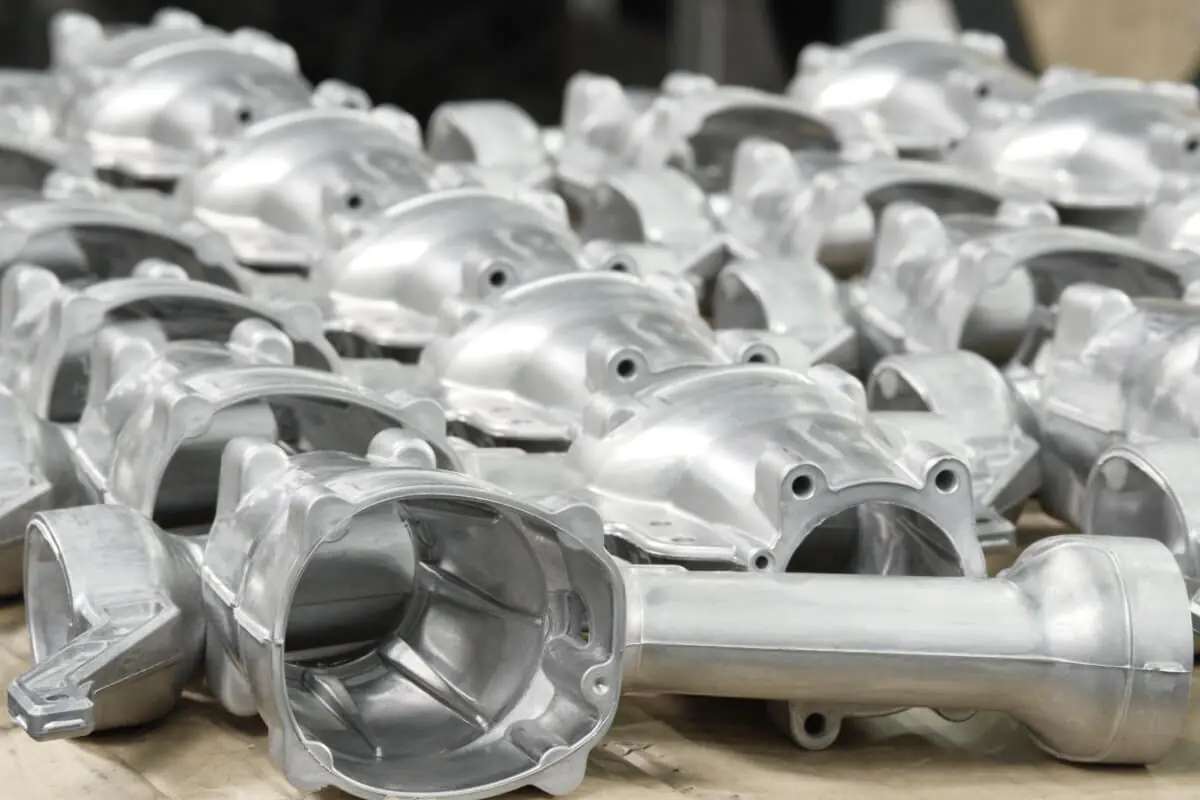
Most aluminum die casting projects in Taiwan use one of two alloy families: ADC-12 (A383) for general industrial parts, or ADC-3 (A360) where corrosion resistance matters. Choosing between them depends on the strength, corrosion exposure, and finish your part needs.
ADC-12 / A383 and ADC-3 / A360
ADC-12, also written as A383, is the common choice for pneumatic tools, LED housings, heat sinks, and general industrial parts. It casts well and suits complex shapes. ADC-3, also written as A360, offers better corrosion resistance and tends to be specified for marine and outdoor components that face salt or moisture.
Understanding regional alloy names
One point causes real confusion for buyers, so it’s worth being clear. Alloy names differ by region. ADC-12 comes from the Japanese Industrial Standards system, while A383 comes from the Aluminum Association system used in the United States, and they describe very similar material. The North American Die Casting Association publishes cross-reference data that maps these names, and the chemistry is set out in the ASTM B85 standard for aluminum die castings.
When you request a quote, name the alloy in your own regional standard and ask the supplier to confirm the equivalent they’ll pour.
How Do You Verify Quality in a Taiwan Die Casting Supplier?
Quality comes down to the individual factory, not the country, and a capable supplier proves it with records: ISO 9001:2015 certification, first article inspection reports, coordinate measuring machine data, material spectrometry, and full traceability.
ISO 9001 certification
Certification is the starting point. ISO 9001:2015 is the international standard for quality management, and it confirms that a factory follows documented, repeatable processes across production. Certification alone isn’t the whole picture, but its absence is a reason for caution.
Inspection capability and records
The better test is how a supplier proves quality on your actual part. A capable factory should show coordinate measuring machine reports, salt spray testing for corrosion where relevant, material spectrometry, and traceability records covering each production lot.
Ask for evidence, not promises. A good supplier will send sample inspection reports and explain how each part is checked through production. If that documentation doesn’t arrive quickly, treat it as a warning sign.
Tariffs and IP Protection When Sourcing from Taiwan
Two things outside the factory gate shape your decision: the tariff you pay to import, and how well your designs are protected while they sit in someone else’s building.
Taiwan tariff rates in 2026
Cost is never just the price on the quotation. In February 2026, the United States and Taiwan signed an Agreement on Reciprocal Trade. According to the Office of the United States Trade Representative, the deal sets an all-in tariff rate of 15 percent on most imports from Taiwan, down from the earlier 20 percent. For a US buyer, that narrows the landed-cost gap between Taiwan and other sourcing bases.
Rates depend on the exact product classification and can change, so confirm the current rate for your part through the Harmonized Tariff Schedule before you commit.
Intellectual property protection
For many OEMs, protecting a design matters as much as the price, and this is a clear point in Taiwan’s favor. Taiwan has a strong legal framework for intellectual property, supported by the Taiwan Intellectual Property Office. In the annual review of global IP protection published by the United States Trade Representative, Taiwan isn’t listed among the countries of concern.
In practice, still put the basics in place. Sign a non-disclosure agreement, confirm that your molds and fixtures stay secured within the supplier’s facility, and ask whether the supplier produces similar parts for competitors.
Choosing a Taiwan Aluminum Die Casting Supplier
The strongest suppliers keep the full process under one roof and can answer detailed questions about it in writing. Two areas separate them from the rest.
The value of single-source manufacturing
Some factories only cast the part, then send it to other shops for machining, surface treatment, and finishing. Every handoff adds time, cost, and a point where quality can slip.
A vertically integrated supplier avoids those handoffs. At JoinCast, we handle mold engineering, die casting, CNC machining, surface treatment, polishing, shot blasting, insert molding, and quality inspection in our own facilities in Changhua. Founded in 1987, we run 12 die casting machines from 135 to 900 tons, produce around 2,000 tons per year, and make parts from 5 grams up to 3 kilograms. For you, that means fewer suppliers to manage, one point of accountability, and tighter control over total landed cost.
A supplier checklist
Use these questions when you assess any aluminum die casting supplier in Taiwan.
- Which alloys do they run, and can they confirm the regional equivalent of the one you need?
- Are they ISO 9001:2015 certified, and can they send sample inspection reports?
- Do they perform machining and finishing in house, or subcontract it?
- What’s the minimum order quantity, and is it negotiable for a first order?
- How do they protect your drawings, molds, and designs?
- Can their engineering team review your part for manufacturability before tooling begins?
Taiwan gives global OEMs a balanced option for aluminum die casting: competitive pricing, mature quality systems, solid design protection, and, as of 2026, a more favorable tariff position for US buyers. If you’d like a quotation or a manufacturability review of your part, contact the JoinCast team with your drawings and specifications.
Frequently Asked Questions
How long does it take to get aluminum die cast parts from Taiwan?
Timelines fall into two stages: tooling and production. A new mold usually takes around 65-90 days to design, build, and sample before the first approved parts are ready, and repeat production runs are shorter because the tooling already exists. Sea freight from Taiwan to North America or Europe usually adds several weeks on top. Ask each supplier for a written schedule covering tooling, sampling, production, and shipping so you can plan your inventory around real dates.
Who owns the mold, and how much does tooling cost?
In most cases the customer pays for the mold as a one-time tooling charge, and the mold is then dedicated to your parts. Cost depends on part size, complexity, and expected volume, so it varies widely from one project to the next. Before you order, confirm in writing who owns the tooling, where it’s stored, and whether you can move it to another supplier later if you choose to.
Do I have to order large volumes to work with a Taiwan supplier?
Not always. Many Taiwan die casting suppliers set a minimum order quantity but will negotiate it for a first order or a new relationship, and some support both prototype builds and high-volume production. If your volumes are modest, ask directly about the minimum and whether the supplier can grow with you from samples to full production.
How can I check quality if I cannot visit the factory in person?
Ask for documented evidence rather than relying on a site visit. A capable supplier can provide first article inspection reports, coordinate measuring machine data, material certificates, and photos or video of your parts before shipment. You can also request paid samples from the production tooling so you can inspect real parts yourself before approving full production.
Is it risky to source from Taiwan given tensions with China?
Many buyers weigh this, and the practical answer is to manage it like any supply risk. Taiwan remains a major, fully operating export manufacturing base that continues to ship to customers worldwide. Common steps include holding a buffer of safety stock, keeping your tooling documented and portable, and, for critical parts, qualifying a second source. These measures apply to any single-country sourcing decision, not only Taiwan.